
TV Wall Mounting in Newcastle: A Practical Guide to Safe & Professional Installation
Mounting a television on the wall can save floor space and create a cleaner, more comfortable viewing area. However, a successful installation involves more than choosing a position and drilling a few holes.
The wall construction, television size and weight, bracket type, viewing position, socket locations and planned cable route all need to be considered before work begins.
Handyman MultiFix provides TV wall mounting in Newcastle upon Tyne and surrounding areas, helping homeowners plan a suitable position and achieve a neat installation.
What Should Be Checked Before Mounting a TV?
Before fitting a TV bracket, it is important to check:
- The television’s size and weight
- The type and condition of the wall
- The bracket’s weight rating and compatibility
- The intended viewing height
- The position of sofas, beds and other furniture
- Nearby power sockets and connected equipment
- The proposed cable route
- Whether the television can be lifted and positioned safely
These details affect the choice of bracket, fixing method and final position. Checking them in advance can also help avoid unnecessary holes, visible cables or a television that feels uncomfortable to watch.
Can You Mount a TV on Plasterboard?
A television can sometimes be mounted on a plasterboard wall, but suitability depends on the construction behind the board, the available structural support, the television’s weight and the type of bracket.
Plasterboard is commonly used in UK homes, particularly in modern properties, extensions and internal partition walls. The plasterboard sheet is normally only the visible surface layer and should not automatically be treated as a suitable structural fixing point for every television.
Where possible, a TV bracket may need to connect to appropriate support behind the plasterboard, such as correctly located timber studs, suitable metal framing or a reinforced mounting area. The appropriate method will depend on how the wall has been constructed.
Using unsuitable fixings can result in a loose bracket, damaged plasterboard or an unsafe installation. Standard wall plugs are not automatically suitable simply because they fit into the drilled hole.
Before mounting a TV on plasterboard, the following should therefore be assessed:
- The construction behind the plasterboard
- The television’s total weight
- The bracket design and weight rating
- The position and spacing of suitable fixing points
- The additional leverage created by a tilting or full-motion bracket
There is no single fixing method that is suitable for every plasterboard wall. If the structure cannot be confirmed or adequate support is not available, the proposed installation should be reconsidered rather than relying on an unsupported assumption.
TV Mounting on Brick and Solid Walls
Brick, block and other solid masonry walls can provide a suitable surface for TV mounting when the wall is in appropriate condition and the correct fixing method is used.
Before drilling, the installer should still consider the condition of the masonry, the location of mortar joints, the required fixing depth and the possible presence of cables or pipes.
A solid-looking surface does not remove the need for proper assessment. Weak, damaged or unsuitable masonry may require a different approach.
Choosing the Right TV Wall Bracket
TV wall brackets generally fall into three main categories:
Fixed brackets
A fixed bracket keeps the television close to the wall. It can provide a simple, low-profile appearance but offers little or no adjustment after installation.
Tilting brackets
A tilting bracket allows the screen angle to be adjusted vertically. This can be useful when a television must be installed higher than the usual viewing position.
Full-motion brackets
A full-motion bracket can extend, turn and tilt. It offers greater flexibility but can place additional leverage on the wall, particularly when the television is pulled away from the surface.
Whichever type is chosen, the bracket should be compatible with the television’s size, weight and VESA mounting pattern. The wall construction and planned viewing position must also be considered.
What Height Should a TV Be Mounted?
There is no universal mounting height that suits every television or room.
The best position depends on:
- The usual seating position
- Viewing distance
- Television size
- Eye level when seated
- Furniture beneath the screen
- The room’s layout and intended use
- Whether the bracket can tilt
A television mounted too high may be uncomfortable to watch for long periods. Before drilling, it is sensible to mark the proposed screen position and check it from the main seating area.
Large TV Wall Mounting
Large televisions require additional planning because their size and weight can make lifting, positioning and alignment more difficult.
The wall structure, bracket rating, fixing points and available working space should be checked carefully. Adequate assistance is also important when lifting and attaching a very large screen.

Handyman MultiFix has completed an 85-inch TV mounting project in Newcastle, along with other TV installations on wallpapered walls and installations incorporating surface cable trunking.
The project demonstrates the importance of measuring the available wall space, marking the bracket position and checking alignment against the surrounding furniture before completing the installation.
Cable Management for Wall-Mounted TVs
Cable planning should be considered before the television is mounted. Power cables, HDMI leads, aerial cables and connections to soundbars or other equipment can affect the final position.
Depending on the wall, room and customer’s requirements, appropriate options may include:
- Grouping and arranging cables neatly behind the television
- Using suitable surface-mounted cable trunking
- Positioning connected equipment close to existing sockets
- Planning cable lengths before fitting the bracket
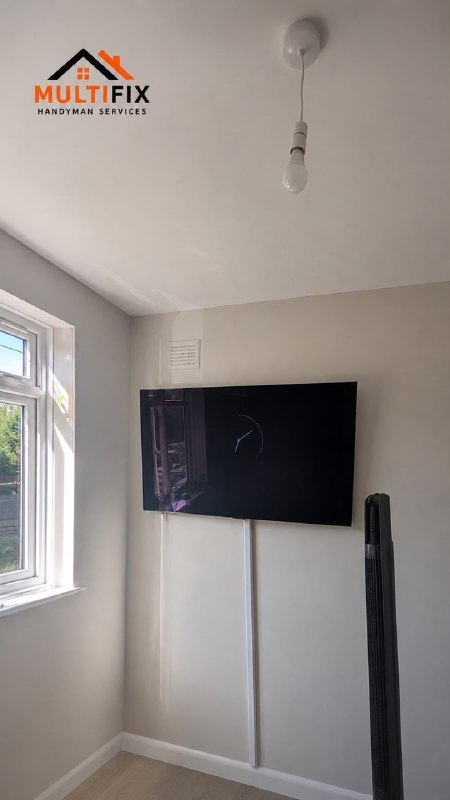
White surface trunking was used in one of the genuine TV installations included in the 85-inch project page. It provided a tidier visible route without concealing the cables inside the wall.
Cables should not be routed inside a wall without first considering whether the proposed method and cable type are appropriate.
TV Wall Mounting with Media Units and Decorative Panels
Some TV installations form part of a wider living-room feature incorporating floating furniture, slatted panels or other decorative elements.
The television, media unit and panels need to be planned together so their positions, spacing and alignment appear intentional. Socket locations and cable routes should also be considered before the decorative elements are fitted.
A genuine TV wall and decorative media unit project in Newcastle included mounting the television, assembling and installing a floating media unit, fitting a decorative slatted panel and arranging the cables neatly.
Common TV Wall Mounting Mistakes
Failing to assess the wall
The visible wall surface does not always reveal the structure or condition behind it. The fixing method should be selected only after the wall and proposed fixing points have been considered.
Choosing an unsuitable bracket
The bracket must be compatible with the television’s size, weight and mounting pattern. The effect of a full-motion bracket on the wall should also be considered.
Selecting an uncomfortable viewing position
A television positioned too high, too low or too far from the seating area can affect viewing comfort.
Poor cable planning
Failing to consider sockets and cable routes before drilling can leave stretched, tangled or unnecessarily visible cables.
Incorrect alignment
Bracket measurements should be checked carefully before drilling. Small errors can become particularly noticeable once a large screen is mounted.
Handling a large television without adequate assistance
Large televisions can be difficult to lift and align safely. Attempting to handle them without sufficient assistance can risk damage to the television, wall or surrounding furniture.
How Much Does TV Wall Mounting Cost in Newcastle?
The site’s dedicated Handyman Cost Newcastle guide currently gives approximately £80 as a general guide for TV wall mounting.
This is not a fixed price for every installation. The actual quote can vary according to:
- Television size and weight
- Wall type and condition
- Bracket type
- Access and working space
- Required fixings or materials
- Cable-management requirements
Sending photographs and installation details allows the work to be assessed more accurately.
Recent TV Mounting Projects in Newcastle
Recent Handyman MultiFix work includes:
- Mounting an 85-inch television after measuring the available wall space and checking the bracket position
- Installing a television on a wallpapered wall
- Mounting a TV and arranging visible cables inside white surface trunking
- Installing a wall-mounted television with a floating media unit and decorative slatted panel
These are genuine completed projects, and the accompanying photographs show the actual installations rather than unrelated stock imagery.
Frequently Asked Questions
Can you mount a TV on plasterboard?
It may be possible, but suitability depends on the construction and structural support behind the plasterboard, the television’s weight and the bracket. Not every plasterboard wall is suitable for every TV.
Can a large TV be wall mounted?
Many large televisions can be wall mounted when the wall, fixing method and bracket are appropriate. The screen’s weight, available space and safe handling requirements must be considered.
What type of TV bracket do I need?
The choice between a fixed, tilting or full-motion bracket depends on the television, wall construction and required viewing position. The bracket must also be compatible with the television’s weight and VESA mounting pattern.
Can visible TV cables be made tidier?
Depending on the room and cable route, visible cables may be grouped neatly or placed inside suitable surface-mounted trunking. The available sockets and connected equipment should be checked before installation.
How do I get a quote for TV wall mounting in Newcastle?
Send Handyman MultiFix a clear photograph of the wall, the television size, bracket details and your postcode. Include any cable-management requirements or furniture that needs to be considered.
Need a TV Mounted in Newcastle?
To request a quote, send Handyman MultiFix:
- A clear photograph of the wall
- The television size and model, if known
- A photograph or product link for the bracket
- Your postcode
- Details of any cable-management requirements
These details will help us assess the proposed installation and advise whether any additional information or a site visit is required.