
Ceiling Rose Installation in Newcastle: What to Check Before Fitting One
A ceiling rose installation in Newcastle can give a pendant light or chandelier a much more settled appearance, especially in a room with coving or other traditional details. However, a good result depends on more than choosing a design you like. We check the size, position, ceiling condition and existing light point before fitting the rose.
This guide explains the practical points we consider during a ceiling rose installation in Newcastle. Here, “ceiling rose” means the decorative feature fitted around a light, rather than the electrical connection fitting with the same name.
Choose a Ceiling Rose That Suits the Room
The best ceiling rose is not always the largest or most detailed one. It should make sense alongside the ceiling height, the size of the room, the coving and the light fitting below it.
A small rose may look lost around a wide chandelier. An oversized design can dominate a modest room and leave too little clear space between the rose and the coving. If the room already contains decorative mouldings, look for a pattern with a similar level of detail rather than introducing a style that competes with them.
Material matters too. Traditional plaster roses can give a crisp, substantial finish, but they are heavier. Lightweight moulded products are easier to handle and often suit some ceilings better. The fixing method must match both the product and the surface above it.
Check the Ceiling Before Installation
The surface behind a decorative feature needs to be secure and tidy. Before we fit the rose, we check for loose paint, crumbling plaster, movement, staining and cracks around the light point. We deal with any underlying problem first.
If the ceiling is wallpapered, the paper must not remain underneath the ceiling rose. It needs to be removed from the full fitting area so the rose can be fixed directly to a sound ceiling surface rather than relying on the wallpaper and its adhesive.
Textured ceilings need particular care because the raised surface can prevent the rose from sitting flat. We may need to prepare the fitting area locally so the back of the rose has consistent contact and the outer edge finishes neatly.
We also check the existing light position. In older properties, a pendant may not sit exactly in the visual centre of the room. Moving a light point is a different job from fitting a decorative rose and may require electrical work, access above the ceiling and additional making good.
Accurate Centre Marking Makes the Difference
A ceiling rose makes small alignment errors easy to notice. Before we use adhesive or fixings, we measure its centre against the room and check it against the light fitting, coving and other visible features.
We normally dry-position the rose first. This allows us to confirm the orientation of the pattern, mark the centre opening and see how the design looks from different parts of the room. It is a simple step that can prevent an expensive mistake.
A Real Ceiling Rose Installation in Newcastle
Handyman MultiFix recently fitted a decorative ceiling rose around an existing chandelier in a Newcastle upon Tyne property. The room already had traditional coving and moulded details, so the new feature needed to look as though it belonged there.
You can view the full ceiling rose fitting project in Newcastle, including the preparation and finished installation.
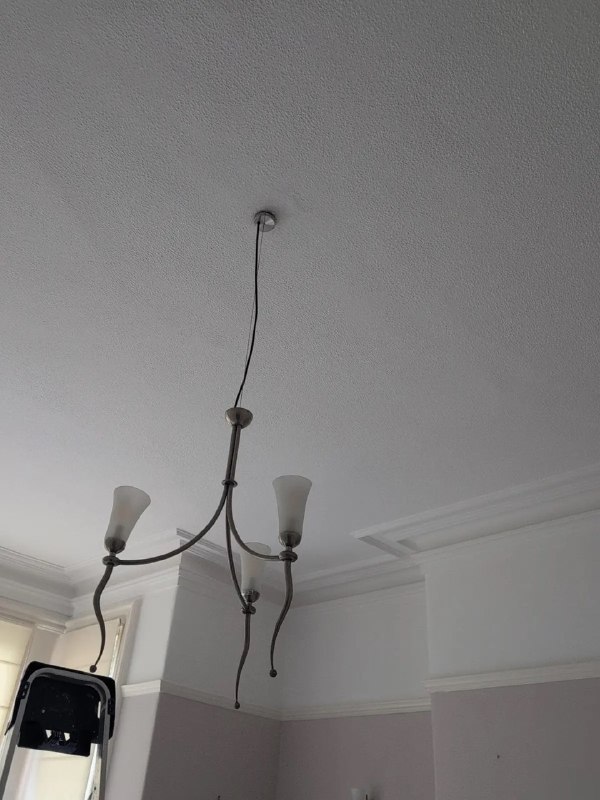
We took down the chandelier and prepared the area around the existing light point. Because the ceiling was wallpapered, we removed the paper from the circular fitting area so the rose could be fixed directly to a sound ceiling surface. The exposed circle in the photograph shows exactly where the wallpaper was taken off.

We then marked the centre carefully, positioned the rose and aligned it with the chandelier and the surrounding ceiling features. After fitting it securely, we finished the perimeter so it met the textured ceiling cleanly. We refitted the chandelier through the centre and checked the alignment again. The finished rose gave the light fitting a clearer focal point without competing with the character of the room.
Our Ceiling Rose Installation Process in Newcastle
The exact method depends on the product, its weight and the ceiling construction, but a careful installation normally includes the following stages:
- Make the light fitting safe. We may remove the chandelier or pendant so the rose can sit flat around the existing light point.
- Prepare the surface. We remove wallpaper, loose paint and other unsuitable material from the fitting area so the rose can be fixed to a sound ceiling surface.
- Measure and dry-fit. We centre the rose, check its orientation and mark the opening.
- Fit the rose securely. We use a suitable adhesive and, where required, appropriate mechanical fixings for the product and ceiling type.
- Finish the edges. We fill small gaps so the rose meets the surrounding ceiling cleanly.
- Prepare for decoration. Once the fitting materials cure, we can paint the rose and repaired edges to suit the ceiling.
- Refit the light. We return the fitting to position and check the final alignment.
We leave any changes to electrical connections, the light point or the support for a heavy fitting to a suitably qualified electrician. Electrical Safety First offers practical home electrical safety advice for work around light fittings.
Common Ceiling Rose Installation Problems
Fitting a Ceiling Rose Over Wallpaper
A ceiling rose should not be bonded over wallpaper. The wallpaper can weaken the bond because the rose is effectively relying on the paper and wallpaper adhesive rather than the ceiling itself. We remove the wallpaper from the full fitting area before applying the appropriate adhesive or fixings.
Fitting Over an Unsound Surface
Adhesive cannot compensate for loose paint or failing plaster. If we skip preparation, visible gaps can appear and the rose may not hold securely.
Using the Wrong Fixing Method
A heavy plaster rose and a lightweight moulded rose do not have the same fixing requirements. We match the fixing method to the product instructions, the ceiling condition and the support available.
Ignoring the Existing Light Point
The centre opening must allow for the cable and fitting without weakening the decorative detail. It is also worth checking that the chandelier canopy or pendant cover will sit properly against the finished rose.
Rushing the Edge Finish
Even a well-centred rose can look unfinished if the perimeter is uneven. Careful filling and preparation help the feature blend into the ceiling after we paint it.
Can a Ceiling Rose Be Fitted Without Moving the Light?
Often, yes. If the existing light point sits in a suitable position and the decorative rose can sit around it safely, we may not need to move the wiring. We still usually take the light fitting down temporarily so we can prepare the ceiling and fit the rose correctly.
If the light is visibly off-centre, the ceiling is damaged or the chandelier needs stronger support, we assess the job before installation begins. This helps separate the decorative work from any electrical or structural work that may also be required.
Need Help With Ceiling Rose Installation in Newcastle?
Handyman MultiFix provides careful interior finishing and decorative installation work across Newcastle upon Tyne and nearby areas. You can view our handyman services or browse more recent projects in Newcastle.
For a ceiling rose quote, send clear photographs of the whole ceiling, the existing light fitting and the rose you have chosen. Include the approximate diameter and material if you know them. Contact Handyman MultiFix and we will review the details before advising on the next step.