
Cracks in Walls: When Should You Worry and When Can They Be Repaired?
Finding a crack in an internal wall can be worrying, particularly when you do not know how long it has been there or why it has appeared. However, not every crack indicates a serious structural problem. Some are limited to the plaster or decorated surface and may be suitable for repair once their condition has been checked.
The important first step is to look at the crack carefully, monitor whether it changes and avoid covering it before considering whether further assessment is needed.
Why Do Cracks Appear in Walls?
Cracks in walls can appear for several reasons. Building materials may expand, contract or dry at different rates, and small changes can sometimes affect plastered surfaces or the joints between different materials. Previous repairs, damaged plaster or movement at a joint can also leave visible lines in a wall.
The shape of a crack alone does not always confirm its cause. Its position, width, length and whether it is changing all need to be considered together.
For this reason, photographs should not be used to diagnose the cause of cracking. Where the cause is uncertain—or there are signs that movement may be continuing—the wall should be assessed by an appropriately qualified professional before cosmetic work begins.
When Is a Wall Crack Usually a Cosmetic Repair?
A fine surface crack that remains stable may be a cosmetic issue rather than evidence of a structural problem. This can include cracking limited to the plaster or decorated finish, especially where there are no related changes elsewhere in the room.
Before deciding to repair it, it is sensible to:
- note when the crack was first noticed
- check whether it becomes wider or longer
- look for related cracking nearby
- check whether nearby doors and windows still operate normally
- monitor it over time if its condition is uncertain
A crack should not automatically be treated as cosmetic simply because it appears narrow in a photograph. If it changes, repeatedly returns or is accompanied by other warning signs, further investigation may be more appropriate than filling and redecorating it.
Why Preparation Matters Before Filling a Crack
Applying filler directly over a visible line is not always enough. Loose paint, unstable filler or damaged surface plaster may prevent the new repair from bonding properly.
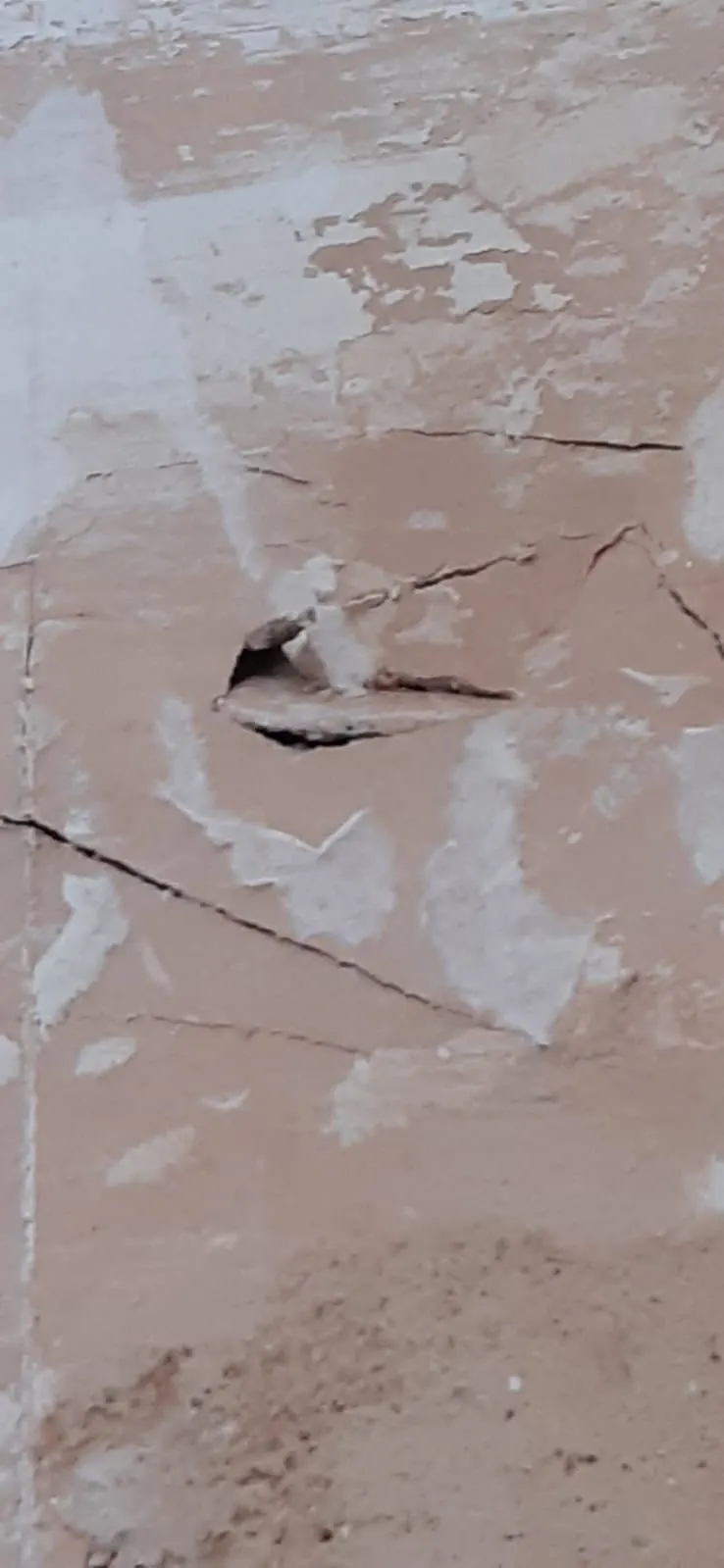
Depending on the condition of the wall, preparation may involve carefully opening the surface of the crack, removing loose or poorly bonded material and checking the surrounding area. The repair area can then be cleaned and prepared before an appropriate filling material is applied.

The aim is to create a sound surface rather than simply hiding the visible line. Once the repair has set, it may need to be levelled and smoothed so that it blends with the surrounding wall.
The photographs in this article show wall repair work carried out by Handyman MultiFix. They are included to illustrate the repair process and should not be used to diagnose the cause of cracking in another property.
When Should You Get a Wall Crack Checked?
Further assessment should come before cosmetic repair when there are signs that the crack may not be stable or its cause is unclear.
Warning signs can include:
- a crack becoming noticeably wider or longer
- significant or continuing changes over time
- diagonal or stepped cracking
- a crack that is wider at one end than the other
- related cracking visible in other parts of the property
- nearby doors or windows beginning to stick without an obvious reason
- several new cracks appearing around the same time
- any situation where structural movement may reasonably be suspected
Current NHBC guidance on cracking in homes explains that most homes experience some cracking and that many cracks are not serious. It also recommends paying attention to features such as changes in size, diagonal or stepped patterns and related changes to doors or windows.
This guidance is useful for recognising warning signs, but it is not a substitute for an inspection of the individual property. Handyman MultiFix can help with suitable surface repairs and preparation, but does not diagnose subsidence or structural movement. A structural engineer, chartered building surveyor or another appropriately qualified professional should assess a crack where structural concerns exist.
Repairing Cracks Before Painting
A repaired crack can remain visible through a new painted finish if the surface has not been prepared properly. Raised filler, loose edges, sanding marks or differences in surface texture may become more noticeable once light reflects across the painted wall.
Before decorating, the repair should be dry, level and properly blended into the surrounding surface. Dust and loose material should be removed, and the area may require suitable preparation before paint is applied.
Our guide to preparing walls before painting in Newcastle explains why inspecting, filling, sanding and cleaning the surface are important parts of achieving a better decorative finish.
If a crack returns after repair, it should not simply be covered repeatedly without considering why it is reappearing.
Wall Crack Repairs in Newcastle
Handyman MultiFix provides practical wall preparation and minor repair services in Newcastle upon Tyne and surrounding areas. Where a crack appears stable and suitable for cosmetic repair, we may be able to prepare the damaged area, fill it and leave the surface ready for decorating.
If the crack shows warning signs or its cause is uncertain, we may recommend obtaining an appropriate professional assessment before repair work proceeds.
You can view our property maintenance and repair services in Newcastle or send us clear photographs and a short description of the wall’s condition so we can advise whether the requested work appears suitable for a handyman repair.