
Damp and Mould Problems in Newcastle Homes: Causes, Prevention and When to Call a Professional
Damp and mould in Newcastle homes can appear as patches, staining or musty smells. Colder weather, rainfall, condensation and problems with water getting into parts of a property can all contribute to damp conditions.
But visible mould is often only a symptom.
Cleaning or painting over the affected area may improve its appearance temporarily, but if the source of the moisture remains, the problem can return. The first step should therefore be understanding where the moisture is coming from.
What Causes Damp and Mould in Newcastle Homes?
Different moisture problems can produce similar-looking marks, so it is important not to assume that every damp patch has the same cause.
Common causes can include:
- condensation and insufficient ventilation;
- leaking pipes or plumbing fittings;
- failed silicone around baths and showers;
- water getting behind shower wall coverings;
- roof or gutter problems;
- moisture entering around windows or doors;
- and cold areas with limited air circulation.
Identifying the source before repairing or redecorating the affected surface can prevent the same problem from appearing again.
Condensation and Poor Ventilation
Condensation forms when warm, moisture-filled air comes into contact with a colder surface.
Bathrooms and kitchens are particularly vulnerable because showering, bathing and cooking introduce moisture into the air. Bedrooms can also develop condensation around windows, external walls and behind large furniture.
Simple measures that may help include using extractor fans, ventilating rooms regularly, keeping ventilation openings clear and allowing air to circulate around furniture.
If damp and mould in Newcastle homes repeatedly returns despite reasonable ventilation, another moisture source may need to be investigated.
Hidden Leaks and Damp Problems in Newcastle Homes
A leaking shower or failed waterproofing system does not necessarily cause damage only inside the bathroom.
Water can travel behind wall coverings and through building materials before the problem becomes visible. Sometimes one of the first obvious signs is staining, damp or mould appearing on the opposite side of the wall in an adjoining room.
Possible warning signs include:
- persistent damp patches;
- mould repeatedly appearing in the same location;
- peeling or bubbling paint;
- discoloured plaster;
- soft or damaged wall materials;
- and a persistent musty smell.
This is why the location of the visible damp does not always reveal the exact location of the original problem.
A Real Handyman MultiFix Project in Newcastle
Handyman MultiFix encountered this type of hidden moisture problem during a real bathroom repair project in Newcastle.
Moisture had penetrated behind the shower wall area and caused deterioration that was more extensive than the visible surface initially suggested.
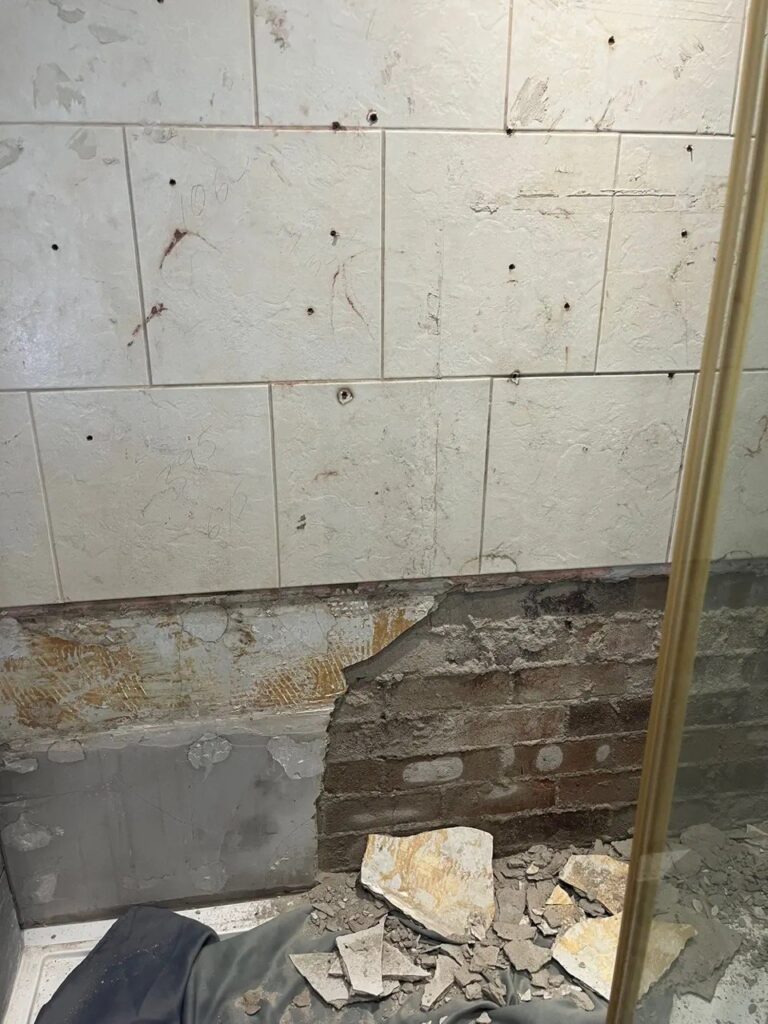
The repair required more than simply cleaning visible marks or repainting an affected wall. The damaged shower wall area was opened so the underlying condition could be assessed. The affected materials were dealt with, the wall was prepared and a suitable waterproofing system was installed before the shower wall was rebuilt and finished.

This project demonstrates an important point: the visible damp patch may be the result of a problem somewhere else.
Readers who want to see the repair can view our Shower Wall Repair & Waterproofing Project in Newcastle and our detailed guide to Leaking Shower Wall Repair and Waterproofing in Newcastle upon Tyne.
Bathroom Damp in Newcastle Homes
Bathrooms combine water, steam and numerous joints that need to remain properly sealed.
Silicone around baths, showers and basins can eventually crack, separate or develop gaps. Shower wall systems can also develop problems if water manages to penetrate behind the finished surface.
Once moisture reaches areas behind a shower, the damage may remain hidden for some time.
Replacing failed silicone early can sometimes prevent a relatively small maintenance issue from becoming a much larger repair.
However, where water has already reached the wall structure, simply applying new silicone may not solve the problem. The affected area may need further investigation and repair.
Why Painting Over Damp Is Usually Not the Solution
A common reaction to a damp patch is to clean it and repaint the wall.
That may improve the appearance, but paint does not stop an active moisture source.
If the underlying problem remains, the new finish may eventually:
- stain;
- bubble;
- peel;
- or develop mould again.
The moisture source should therefore be addressed before completing the final decorative repair.
Can You Deal With Small Areas of Mould on Walls?
Small areas of surface mould associated with temporary condensation may sometimes improve with appropriate cleaning, ventilation and better moisture control.
However, repeatedly cleaning the same area without understanding why it becomes damp is unlikely to provide a lasting solution.
Further investigation is advisable when:
- mould repeatedly returns;
- the affected area is becoming larger;
- the wall or ceiling remains damp;
- paint or plaster is deteriorating;
- there are signs of a plumbing or shower leak;
- or the source of the moisture is unclear.
When Should You Call a Professional About Damp Problems in Newcastle?
Professional help can be useful when the cause cannot easily be identified or physical repairs are required.
This might include situations where:
- bathroom silicone has failed;
- a plumbing leak is suspected;
- water has entered behind shower panels or wall coverings;
- damaged wall surfaces require repair;
- an adjoining room has been affected;
- or the area needs repair and preparation before redecorating.
Not every damp problem is suitable for general handyman work. Significant structural damp, extensive water penetration or problems requiring specialist diagnosis may need assessment by an appropriately qualified specialist.
How Can You Help Prevent Damp and Mould in Newcastle?
Regular maintenance can help identify moisture problems before they cause more extensive damage.
It is worth periodically:
- checking silicone around baths, showers and basins;
- looking for small plumbing leaks;
- checking ceilings and walls for new staining;
- keeping bathrooms and kitchens ventilated;
- checking around windows and external doors;
- watching for peeling paint or swollen materials;
- and investigating recurring damp instead of repeatedly covering it.
Finding a failed seal or small leak early can be much easier than repairing walls after moisture has been entering them for a prolonged period.
For further general advice, see Sefton Council’s condensation, damp and mould guidance.
Damp and Mould Repairs in Newcastle
When damp and mould in Newcastle homes is linked to a maintenance issue, Handyman MultiFix may be able to help with appropriate property repairs in Newcastle upon Tyne and surrounding areas.
Depending on the cause and extent of the problem, appropriate work may include silicone replacement, repairs to water-damaged surfaces, shower wall repairs, preparation and associated decorating work.
If you notice recurring damp, mould or signs of water damage, you can send us clear photographs or a short video together with your postcode area.
We can assess whether the work appears suitable for Handyman MultiFix or whether specialist investigation would be more appropriate. Contact Handyman MultiFix to discuss the problem.
Frequently Asked Questions
Why does mould keep coming back after I clean it?
Recurring mould usually means moisture is continuing to reach or remain on the surface. Condensation, ventilation problems or a hidden leak are possible causes. Finding the moisture source is more important than repeatedly cleaning the visible mould.
Can a leaking shower cause damp in the next room?
Yes. Water getting behind a shower wall can sometimes affect adjoining building materials. In the Handyman MultiFix Newcastle project described above, moisture damage extended beyond the finished shower surface.
Can I just paint over a damp patch?
Painting should normally come after the moisture source has been identified and dealt with. Otherwise staining, peeling or mould may return.
Can failed bathroom silicone cause water damage?
Failed or separated silicone can allow water into areas that should remain protected. Damaged seals should therefore be investigated and replaced where appropriate.
Does every damp problem need a damp specialist?
No. Some moisture problems originate from straightforward maintenance issues such as leaks or failed seals. However, significant, persistent or unexplained damp may require specialist investigation.
Can Handyman MultiFix Help With Damp Problems in Newcastle?
Handyman MultiFix can undertake appropriate property maintenance and repair work associated with moisture damage. Where the cause or extent of the problem requires specialist investigation, we would recommend obtaining the appropriate specialist advice.
2 Comments
Mehdi
21 Aug 2026Dear [Handymanmultifix],
I recently read your blog about [topic] and found it very helpful. The subject was particularly interesting and answered several questions I had.
I would now like to book an appointment. Could you please let me know how I can arrange this and what availability you currently have?
Kind regards,mehdi
Handyman MultiFix
24 Aug 2026Hi Mehdi,
Thank you for your kind comment. I’m glad you found the blog helpful.
You can book an appointment directly through our website, or feel free to contact me and I’ll be happy to check my availability for you.
Kind regards,
Abbas
Handyman MultiFix