
How to Fix Squeaky Floorboards in Newcastle: Common Causes and Practical Repairs
Squeaky floorboards in Newcastle homes can be frustrating, especially in bedrooms, hallways and busy rooms. The noise often comes from movement between the floorboards, joists and fixings, but the right repair depends on what is moving.
This guide explains common causes, safe checks and possible repairs. It is general advice, not a diagnosis of your floor.
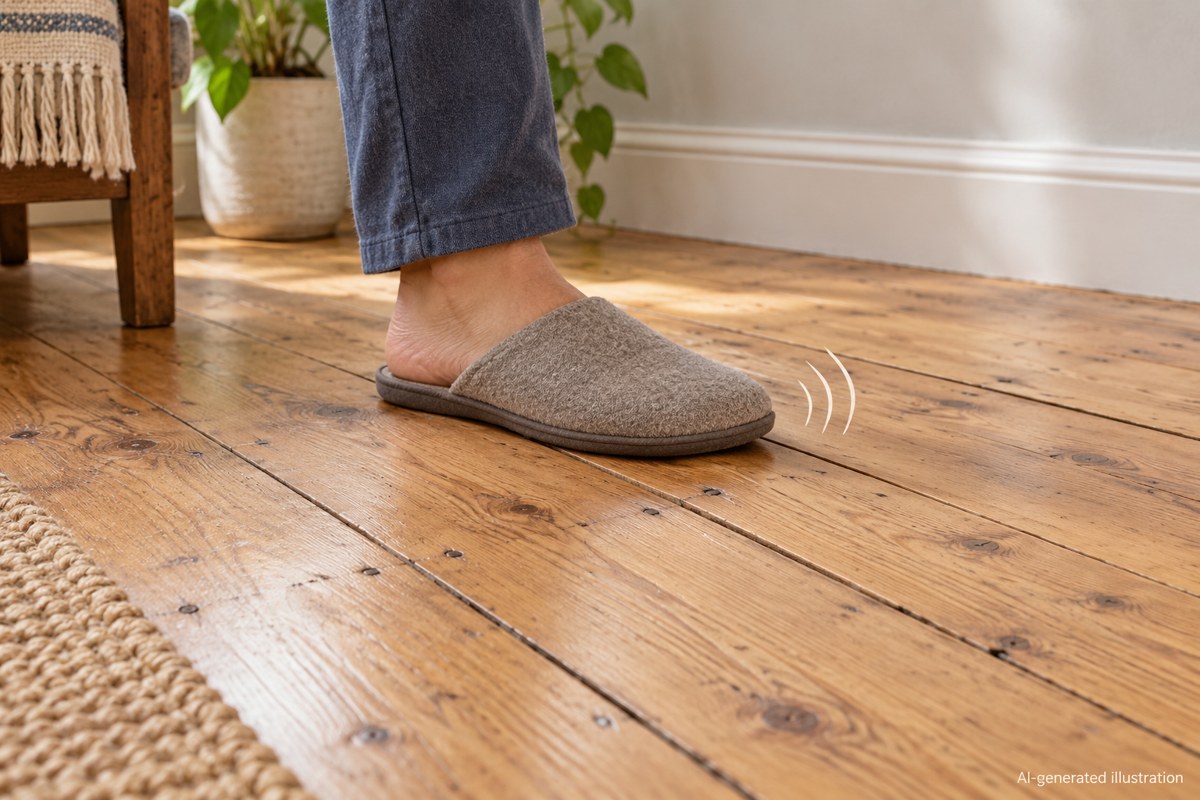
Why do floorboards squeak?
Floorboards can squeak when timber rubs against timber or moves against a fixing. Common causes include:
- Loose or unsuitable fixings: a board can move around an old nail or a fixing that no longer holds securely.
- Movement over joists: the boards may move against the timber supports beneath them, particularly where contact or support is poor.
- Rubbing edges or joints: adjoining boards or subfloor panels can rub as someone walks across them.
- Changes in moisture: timber expands and contracts as its moisture content changes, which can affect gaps and friction.
However, the sound may come from the subfloor beneath a carpet or laminate finish. Adding fixings to the visible surface without identifying the source can miss the real problem.
Identify the floor construction first
Solid timber floorboards
Traditional floorboards are individual pieces of timber, often fixed to joists. Repairs may involve securing a loose board, repairing a damaged edge or supporting a previously cut board end. Sound original boards are worth retaining where practical.
Chipboard and other sheet subfloors
Chipboard, plywood and OSB are sheet materials, rather than individual solid timber boards. With panels supported on joists, the joints, fixings and support all need checking. Some systems use adhesive as well as mechanical fixings; any repair must suit the actual construction and the board manufacturer’s guidance.
A swollen or weakened panel needs assessment of both the damage and its cause. Simply adding screws may not provide a sound repair.
Floating laminate or engineered flooring
A floating floor is designed to move as a connected surface. Do not screw through it into the floor below to silence a squeak. The cause may involve the subfloor, underlay, joints or space for expansion. Our guide to common laminate flooring problems covers this different type of floor.
Simple checks for squeaky floorboards in Newcastle homes
If the floor feels firm and safe, listen while someone walks normally across the room. Note where the sound occurs and whether it is confined to one spot or spread across a larger area. Look for visible gaps, raised fixings, water staining or recent changes.
Do not drill, cut, nail or drive screws blindly into a floor. Electrical cables, water pipes and heating pipework may run immediately underneath. Finding a joist does not prove that the fixing route is clear. The route and safe working depth must be established before any intrusive work.
If you cannot establish what is below the boards, leave the fixing or lifting to a competent professional. Electrical Safety First’s DIY advice explains the risks of drilling into concealed wiring and when to seek electrical help.
How to fix squeaky floorboards safely
Once the cause and hidden services have been checked, a local repair may be enough. Possible approaches include:
- Securing a loose board: a suitable replacement fixing may reduce movement where the board and support are sound. Its type, position and length depend on the floor and what lies beneath it.
- Supporting a loose end or edge: a carpenter may need access beneath the board to provide suitable support.
- Repairing damaged material: a split board or weakened panel may need a local repair or replacement, after addressing any moisture problem.
Filling a visible gap is not a general cure for a squeak. It will not secure loose boards or repair inadequate support. Avoid applying glue, sealant or other products without checking that they suit the floor and its finish.
When might squeaky floorboards need lifting?
Lifting may be necessary to identify concealed services, inspect damage or reach an unsupported joint. Where there is safe access from below, some repairs may be possible without lifting the finished surface.
In older UK properties, previous plumbing or electrical work may have left cut boards or fragile edges. Lift only what is necessary and protect original timber and any ceiling below. The SPAB’s guidance on timber floorboards explains why careful, local repairs are often preferable to unnecessary replacement.
When should you seek professional assistance?
A handyman or carpenter can investigate local movement and suitable minor repairs. Arrange an inspection if the cause is unclear, access is difficult or the noise keeps returning.
Soft areas, suspected rot, marked sagging or significant new movement need suitable professional assessment. Keep off an area that feels unsafe. A building surveyor can investigate deterioration, while suspected structural problems may need a structural engineer. Do not treat these signs as a routine squeak repair.
If you rent, report the problem to your landlord or managing agent before arranging alterations.
Frequently asked questions
Does a squeaky floor mean it is structurally unsafe?
Not necessarily. Noise alone does not establish the condition of the floor. Local friction can cause squeaks, but softness, sagging or worsening movement should be investigated.
Can the floor be repaired without removing the carpet?
Sometimes, but access depends on the construction and cause. The carpet and underlay may need lifting locally to inspect the boards and services. Avoid blind fixings through the carpet.
How much does a squeaky floor repair cost?
The price depends on the affected area, floor covering, access, materials and underlying condition. Flooring work is individually quoted on our handyman prices page; an inspection may be needed before confirming the repair.
Help with squeaky floorboards in Newcastle
Start with a careful inspection, then choose the least disruptive repair that suits the floor. Handyman MultiFix provides home repairs and property maintenance across Newcastle upon Tyne and surrounding areas.
Contact Handyman MultiFix with your postcode, a short description and photos or a video showing where the noise occurs. We can discuss whether a visit is needed and whether the work is suitable for our service.
MultiFix, a brand you can trust.