
Herringbone Brick Patio Newcastle: Step-by-Step Guide to Professional Paving
Living in Newcastle upon Tyne is great, but we also face plenty of rain, strong winds, and cold winters. A well-built patio should look attractive and withstand the North East’s challenging weather for many years. Recently, the Handyman MultiFix team completed a beautiful herringbone brick patio in Newcastle. In this step-by-step guide, you’ll see exactly how we completed the project, along with practical tips for local conditions. If you’re planning a new patio in Newcastle, this real-life project will show you what professional paving looks like.
Why Choose the Herringbone Pattern for Your Newcastle Patio?
The herringbone pattern is one of the most popular and durable choices for brick patios in the UK. Its interlocking zigzag design distributes weight evenly, making it highly stable and resistant to shifting — especially important in Newcastle’s wet and freezing conditions. In our recent project, we combined dark grey/black bricks with a contrasting red brick border. This not only creates a beautiful visual effect but also gives the patio a premium, timeless look that increases property value.
For more information about paving materials and installation guidance, you can also visit Pavingexpert.
Our Herringbone Brick Patio Newcastle Project
In this project, we transformed a plain garden area into a functional and stylish outdoor space. The client wanted a durable patio that could handle Newcastle’s rainy climate while looking elegant. We chose the herringbone pattern for its strength and visual appeal. We also added a contrasting red brick border to frame the design beautifully.
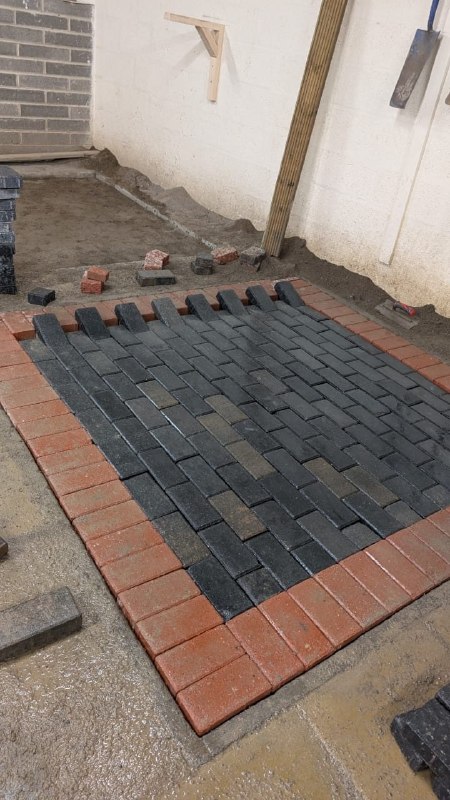
Step-by-Step: How a Professional Herringbone Brick Patio Is Installed
A durable herringbone brick patio starts long before the first brick is laid. Proper excavation, a well-compacted sub-base, effective drainage, and accurate brick alignment all work together to create a patio that remains stable and attractive for years. While the finished pattern is what most people notice, the quality of the installation process is what determines its long-term performance. Below, we explain the key stages involved in building a professional herringbone brick patio and why each step matters.
1. Planning and Measuring the Area
Every successful herringbone brick patio begins with careful planning. Before excavation starts, professionals accurately measure and mark the area to ensure the pattern fits the available space without awkward cuts or uneven borders. At this stage, professionals also assess ground levels, drainage requirements, and the position of surrounding features such as walls, fences, and garden paths. Good planning reduces material waste, improves installation efficiency, and helps create a patio with clean, symmetrical lines.
2. Preparing the Ground and Sub-base
Once we mark the layout, we excavate the existing soil to the required depth. A strong foundation is essential because even the most attractive brick pattern can fail if the base underneath is unstable. After excavation, we install a compacted MOT Type 1 sub-base to distribute weight evenly and minimise future movement. We also create the correct fall for drainage, allowing rainwater to flow away from the patio instead of collecting on the surface. Careful ground preparation ensures a stable, long-lasting patio that performs well in Newcastle’s changing weather conditions.
3. Laying the Herringbone Pattern
We then lay the paving bricks in an interlocking herringbone pattern, usually at a 45° or 90° angle, depending on the layout and the desired appearance. Careful positioning of the starting line is essential because even a small alignment error can become more noticeable as the paving progresses. Consistent joint spacing and regular surface checks keep the patio level and visually appealing. The interlocking herringbone pattern also provides greater resistance to movement than many simpler paving patterns, making it a durable choice for long-term performance.

4. Cutting Border Bricks
Once the installer completes the main herringbone pattern, they carefully measure and cut the bricks around the perimeter to fit the available space. Accurate cutting creates clean, consistent edges and helps prevent large or uneven gaps. The installer then installs a secure border course to hold the paving bricks in position and prevent the pattern from spreading or shifting over time. The finished edges give the patio a neat appearance while also improving its long-term stability.
5. Compacting and Jointing the Paving
After we lay all the bricks and complete the edges, we compact the entire surface using a plate compactor. This process settles the paving bricks firmly into the bedding layer and creates a level, stable finish. We then brush kiln-dried jointing sand across the patio to fill the narrow gaps between the bricks. Next, we compact the surface again to help the sand settle deeper into the joints. This final process locks the individual bricks together, reduces movement, and improves the patio’s long-term durability.
Why Proper Ground Preparation Matters
The long-term performance of a herringbone brick patio depends heavily on what is installed beneath the visible paving. Even a well-laid pattern can begin to sink, move or collect water if the ground has not been excavated and compacted correctly. A suitable sub-base helps distribute weight evenly, while the correct fall allows rainwater to drain away from the property. Careful preparation at this stage reduces the risk of future repairs and helps the patio remain stable, level and visually consistent.
Benefits of a Professionally Installed Brick Patio
A professionally installed brick patio offers more than an attractive outdoor surface. Correct excavation and sub-base preparation help prevent sinking and uneven areas, while an appropriate fall allows rainwater to drain away efficiently. Consistent brick alignment and secure edge restraints reduce movement and help the patio retain its shape. Professional installation also produces cleaner cuts, tighter joints and a more balanced overall appearance. These details are especially important in Newcastle, where regular rain and seasonal temperature changes can expose weaknesses in poorly prepared paving.
- Strong and stable construction
- Effective surface drainage
- Reduced risk of sinking or movement
- Neat and consistent brick alignment
- Durable finish for everyday outdoor use
- A timeless design that complements many properties
Looking for a Brick Patio Installer in Newcastle?
If you are planning a new brick patio, garden path or paved outdoor area, careful preparation and professional installation can make a lasting difference. Handyman MultiFix provides practical paving solutions tailored to the size, layout and condition of your outdoor space. From initial ground preparation to brick laying, cutting, jointing and final finishing, each stage is completed with attention to stability, drainage and appearance.
You can also explore our Home Improvement Services for more professional property improvement solutions.
Every herringbone brick patio Newcastle project we complete follows the same careful installation process to ensure long-lasting performance.
Frequently Asked Questions
How long does it take to install a herringbone brick patio?
The installation time depends on the size of the patio, ground conditions and the amount of preparation required. Most residential herringbone brick patios can be completed within a few days, while larger or more complex projects may take longer.
Is the herringbone pattern stronger than other paving patterns?
Yes. The herringbone pattern is one of the strongest brick laying patterns because the interlocking design distributes weight evenly across the surface. This makes it a popular choice for patios, driveways and other areas with regular foot traffic.
Does a brick patio need regular maintenance?
Brick patios require very little maintenance. Occasional sweeping, washing and topping up the jointing sand when necessary will help keep the surface clean, stable and looking its best.
Why is ground preparation so important?
Proper excavation, a compacted sub-base and good drainage are essential for preventing movement, sinking and standing water. A strong foundation ensures the patio remains level, durable and attractive for many years.