
A well-built deck can make a garden more practical, attractive and easier to enjoy. Over time, even good decking can start to show signs of wear.
If you’re considering decking repair in Newcastle, it is important to spot early signs of damage before they get worse.
Loose boards, soft timber, damaged steps, unstable railings and slippery surfaces are all common problems. These issues often appear after heavy rain and regular outdoor use.
If your decking in Newcastle is starting to look worn or feel unsafe, it is worth checking the problem early.
At Handyman MultiFix, we help with decking repair in Newcastle and other outdoor maintenance work.
In many cases, a small problem such as a loose board or minor damage can be fixed early. This helps prevent a larger and more expensive repair later.
Below are a few simple things to check if your decking needs attention and may require decking repair in Newcastle.
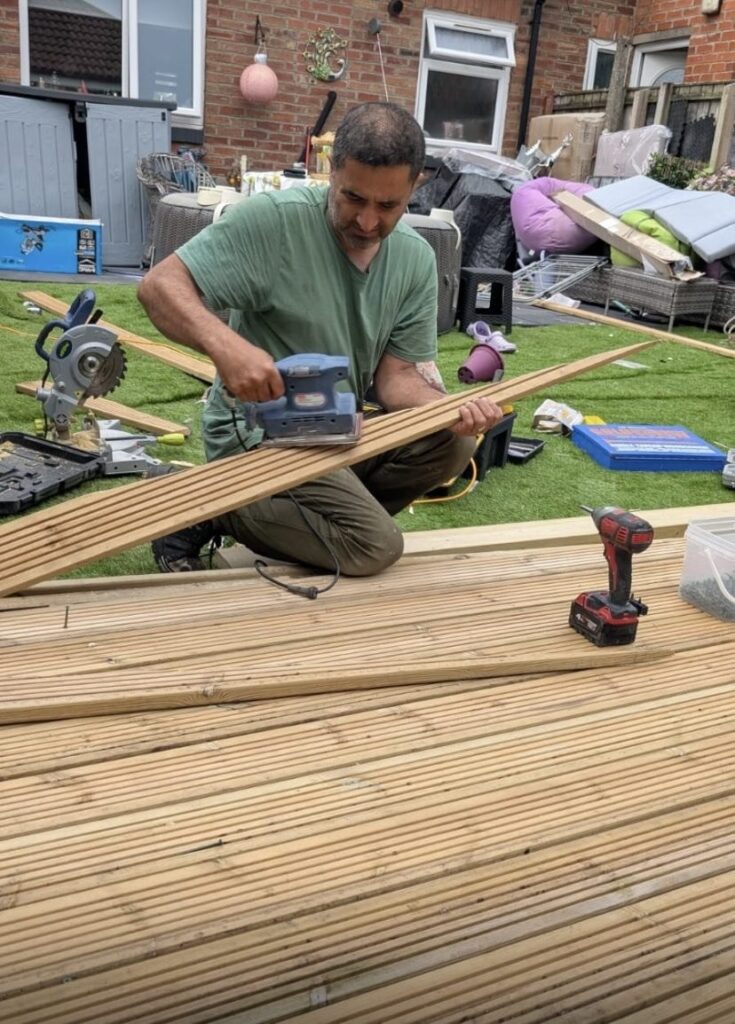
1. Check for loose or moving decking boards
Walk across the decking slowly and pay attention to any boards that feel unstable, springy or uneven. If a board moves under pressure, the fixing may have loosened or the timber underneath may have started to weaken. Loose decking boards should not be ignored, especially in areas that are used regularly.
2. Look for signs of rot, swelling or soft timber
Check around the edges, steps and any areas where water tends to sit. If the timber feels soft, looks swollen or is beginning to break down, moisture may already have got into the decking boards or the frame below. This is one of the clearest signs that decking repair may be needed rather than just cleaning or general maintenance.
3. Inspect screws, fixings and deck supports for decking repair
Rusty screws, raised fixings or weak support points can affect the strength of the decking. If parts of the deck have started to sink, wobble or separate, the problem may be underneath rather than on the surface. A proper decking repair should deal with the cause of the issue, not just the visible damage on top.
4. Check steps, edges and handrails
If your decking includes steps, balustrades or handrails, make sure everything feels secure. These parts often loosen over time and can become a safety risk, especially for children, older family members or guests using the garden.
5. Clean the surface and check for slippery areas
Sometimes decking looks worse than it is because dirt, algae and surface staining build up over time. A proper clean can improve the appearance, but if the surface still feels damaged, splintered or unsafe after cleaning, the deck may need repair work rather than simple maintenance.
If you want to read more about general deck safety and maintenance, it is also worth checking practical guidance from the UK’s health and safety advice resources.
When should you call a professional for decking repair?
If the issue is limited to surface dirt or one minor loose fixing, you may be able to spot the problem early and stop it getting worse. But if you notice rot, movement in the frame, multiple loose boards, unstable steps, or signs that the decking structure is no longer solid, it is best to get it checked properly.
At Handyman MultiFix, we carry out practical decking repairs in Newcastle and can help restore outdoor spaces that have become worn, damaged or unsafe. If your decking needs attention, feel free to get in touch and we can take a look, advise on the best repair option, and help get it back into good condition.
Need help with decking repair in Newcastle?
If your decking has loose boards, signs of rot, damaged steps or general wear and tear, Handyman MultiFix can help. Get in touch to arrange a quote for decking repair in Newcastle and other outdoor maintenance work.
We also provide a range of outdoor repair and handyman services in Newcastle, including practical property maintenance and garden improvement work.